The Light You’re Seeing Is Already From the Past
(This article is available in both English and Korean. 한국어 번역은 글 아래에 이어집니다.)
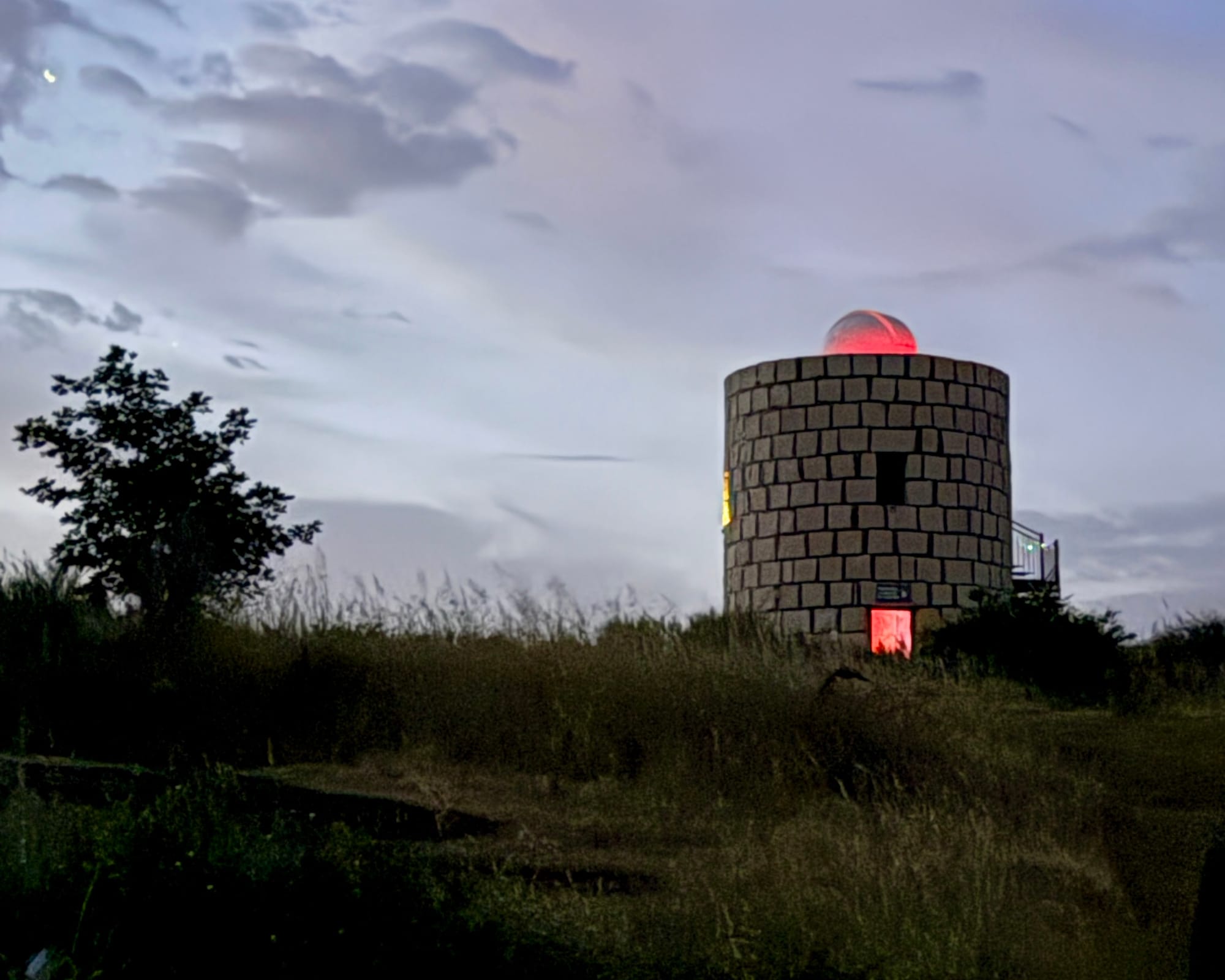
One evening, at the Astronomy Observatory of Travancinha in Serra da Estrela, Portugal, I found myself standing beneath a sky larger than any sky I had seen in years.
The air was cool after a day of intense mountain sun.
The astronomer told us that Portugal has one of the highest levels of light pollution in Europe.
Which made this place feel even more special.
People had built an observatory here because darkness itself had become rare.
You had to travel into the mountains to find a sky capable of revealing what was already there.
That idea stayed with me.
Not because of astronomy.
Because of life.
That evening, I began with Venus.
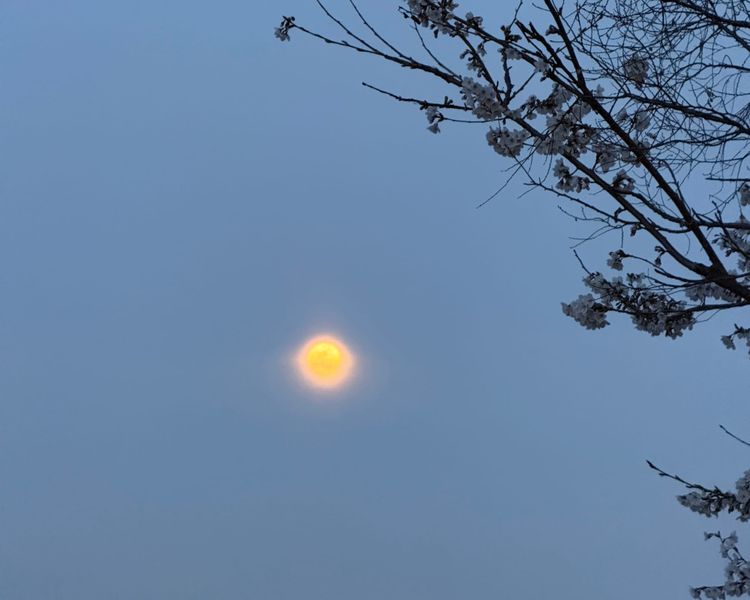
Then the moon.
Not as a distant glowing shape, but close enough to see craters etched across its surface.
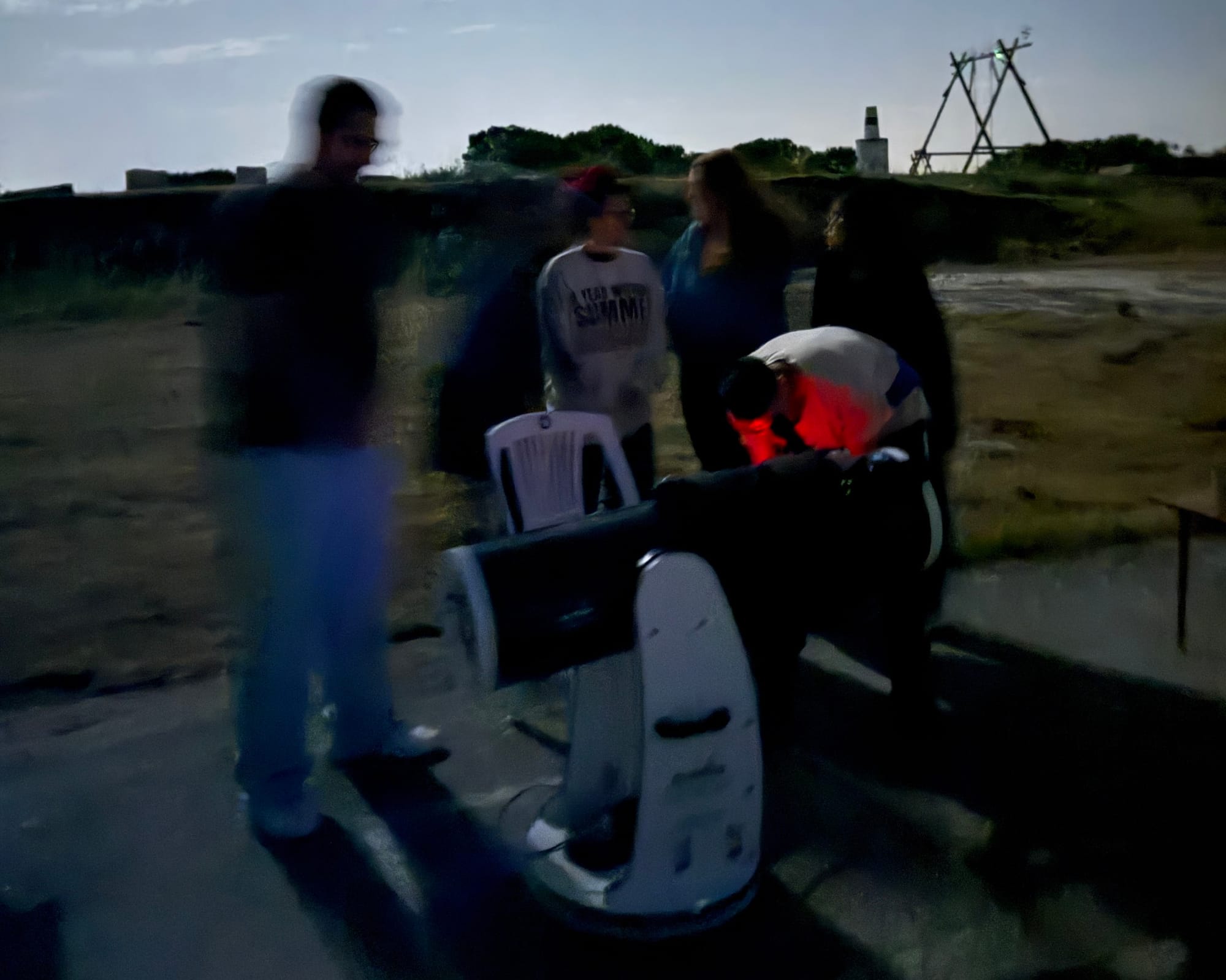
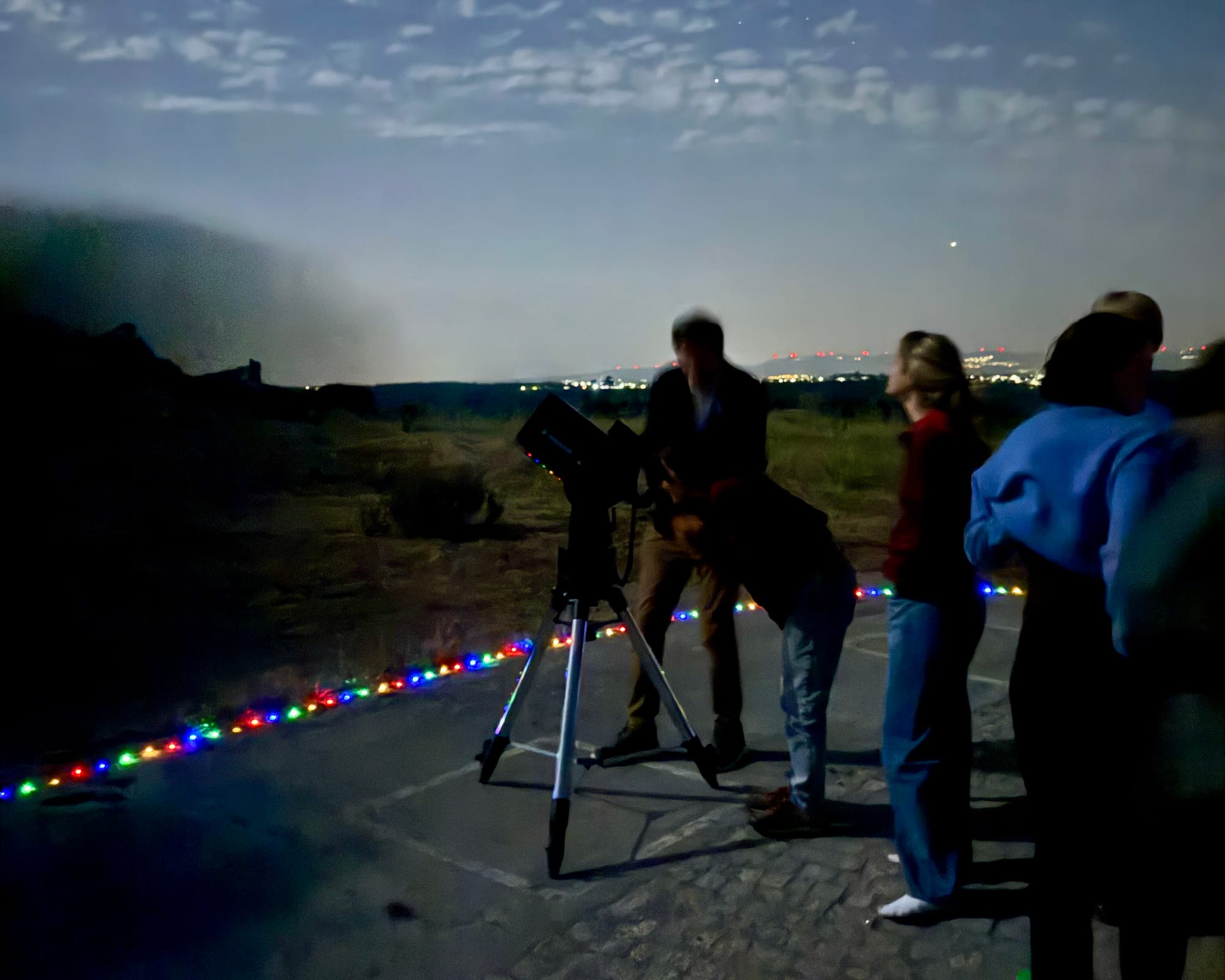
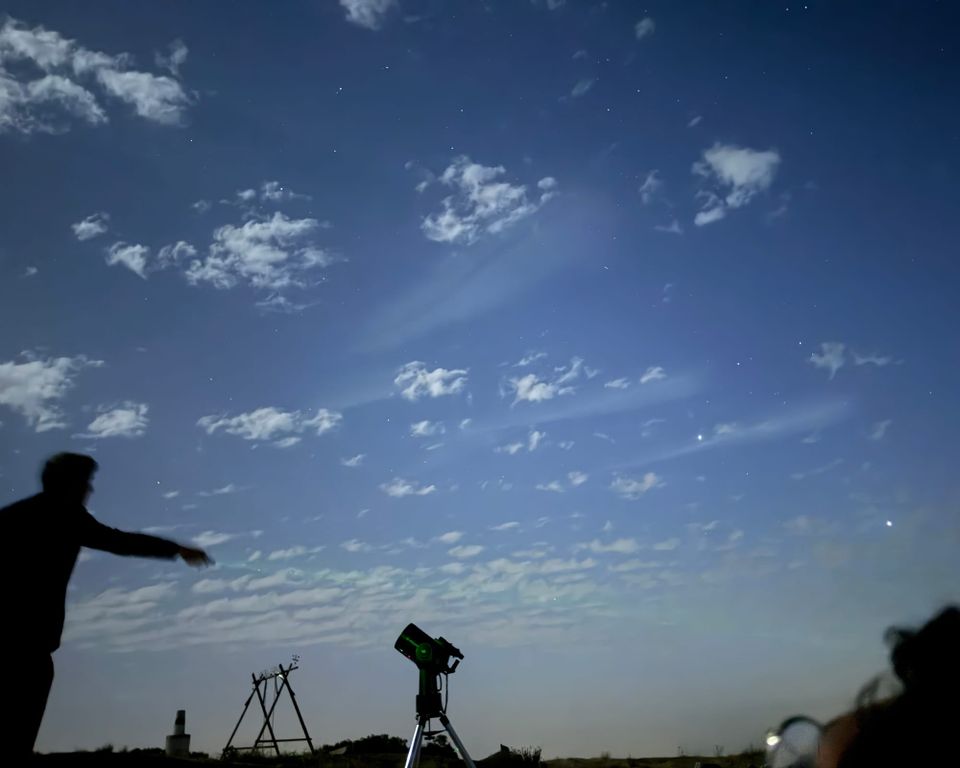
Waiting our turn to see the moon, Venus, and Jupiter — not as an idea, but as a landscape. May 26, 2026. 10:55 PM.
Then Jupiter.
Not simply a bright point in the sky, but a planet with visible bands moving across it.
I had known these things existed.
But seeing them felt different.
Knowing and Seeing
Later, we stepped away from the telescope.
The astronomer pointed out constellations.
The North Star.
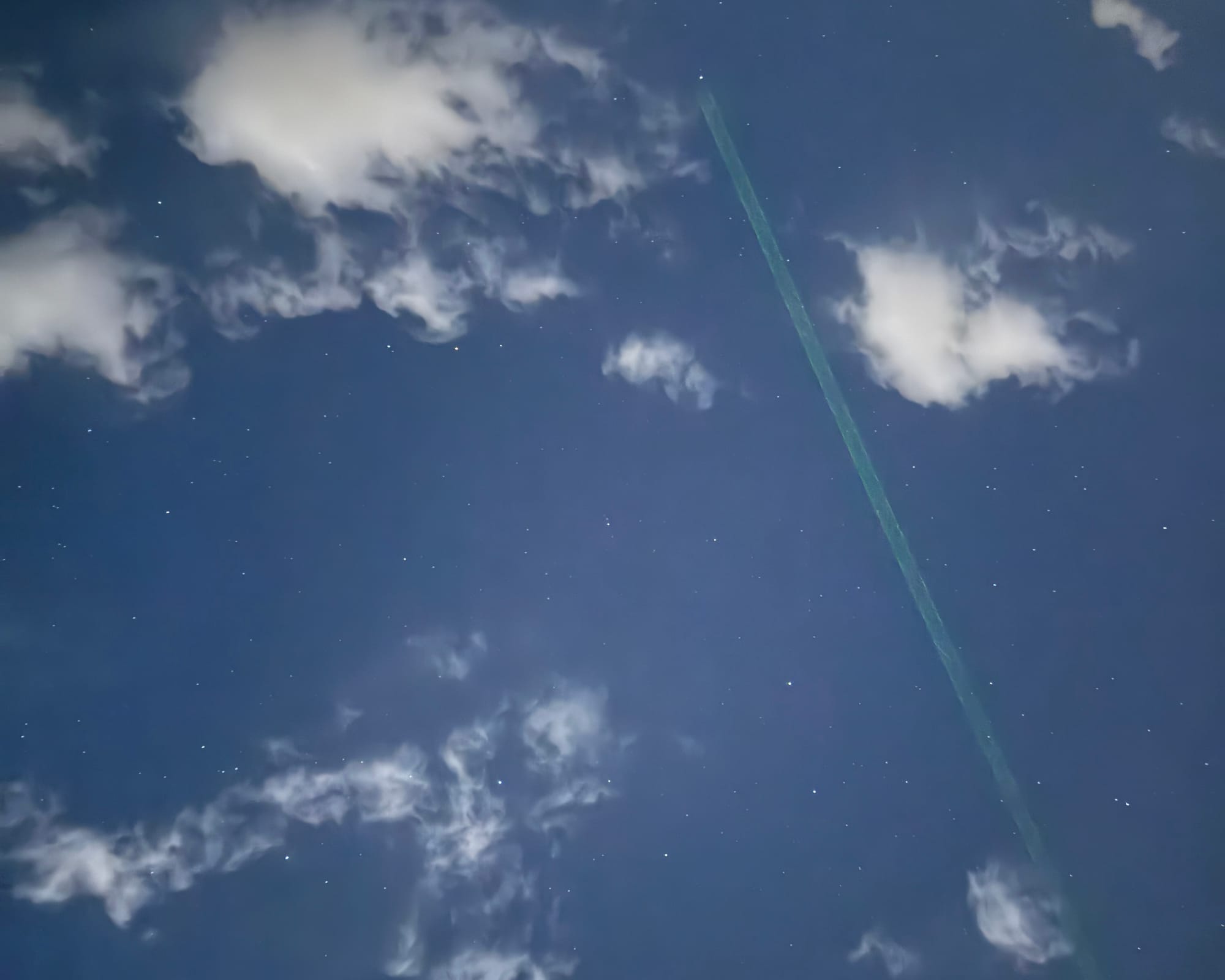
Patterns I had heard about for years but had never really learned to find.
At one point, he gestured toward a section of the sky where the Milky Way stretched beyond what our eyes could fully perceive.
I couldn’t actually see it.
But for the first time, I knew where it was.
And strangely, that felt important.
There is a difference between knowing something exists and knowing where to look.
There is also a difference between knowing something intellectually and seeing it with your own eyes.
I think many of life’s most important realizations live inside that gap.
The Delay
Earlier that evening, the astronomer explained something most of us already know.
Because of the speed of light, what we perceive is always delayed.
The stars we see are not happening in real time.
We are looking at older light.
I had heard this fact before.
But standing there beneath that sky, it landed differently.
And somewhere between Venus, moon craters, Jupiter, and an invisible Milky Way, I found myself wondering whether our lives work this way too.
The Questions I Brought With Me
In the days before arriving in the mountains, I had been carrying a different set of questions.
Where should I live?
Who do I want to become in the next chapter of my life?
What kind of work do I want to build?
Those questions led me through long conversations about place, belonging, creative work, astrology, astrocartography, and the strange relationship between geography and identity.
Somewhere between Lisbon and Serra da Estrela, those reflections became a small project that I ended up launching from a hotel room in Seia.
From the outside, it may have looked like an answer.
Inside, it still felt like a question.
A beginning.
A signal.
Not a conclusion.
What We Can’t Yet See
Under that sky, I kept thinking about how often people interpret invisibility as absence.
Nothing is changing.
The transition isn’t working.
The creative practice isn’t becoming anything.
But what if we are simply looking at older light?
What if some changes are already happening — internally, relationally, creatively — long before we can perceive their effects?
In coaching, I often meet people inside this tension.
Their identity is changing.
Their work is changing.
Their relationship to ambition, creativity, belonging, or home is changing.
But because the visible evidence has not yet arrived, they assume nothing is happening.
The signal hasn’t reached them yet.
And sometimes the issue isn’t that the stars aren’t there.
Sometimes there is simply too much light pollution.
Too much noise.
Too much urgency.
Too many expectations about what change should look like.
The thing we are looking for may already exist.
We just haven’t found the darkness required to see it.
The Light You’re Sending
Standing beneath that Portuguese sky, listening to someone explain light traveling across impossible distances, I found myself thinking about the reverse possibility too.
Perhaps we are not only receiving delayed light.
Perhaps we are also sending signals farther than we know.
The conversations we begin.
The risks we quietly take.
The projects we launch.
The identities we start inhabiting before they fully make sense.
Perhaps some of it is already traveling.
Already reaching places we cannot yet see.
Already becoming visible to someone else.
The Distance Between Change and Recognition
Even when change has already happened, realization often arrives later.
We do not always recognize ourselves in real time.
Sometimes we need distance.
A different landscape.
A conversation.
A season.
Only then do we look back and realize that something had already begun changing long before we noticed it.
Perhaps this is true of stars.
And perhaps it is true of people.
The light arrives.
Then awareness arrives.
And sometimes awareness arrives much later.
Maybe part of the work is learning not to rush that process.
To trust it.
To meet it with curiosity rather than urgency.
To allow ourselves the same patience we naturally extend to seasons, mountains, and distant galaxies.
A Small Reflection
I left Portugal carrying many things.
Mountain air.
Long conversations.
Unexpected questions.
A renewed sense of direction for my artistic practice, my studio, and my ongoing experiment with a Seoul-based nomadic life.
But strangely, what stayed with me most was a scientific fact I thought I already understood.
You are not always looking at the present.
And perhaps your life is not always waiting for proof before it begins changing shape.
What in your life might already be changing, even if you cannot fully see it yet?
And what might already be traveling outward from you, even before you know where it will land?
If this resonates with where you are right now, I offer 1:1 coaching for people navigating creative transitions, reinvention, and more expansive ways of living and working.
— Jay
우리가 보고 있는 빛은 이미 과거의 것이다
별, 변화, 그리고 삶의 어떤 것들은 왜 늦게 보이기 시작하는가
포르투갈 Serra da Estrela에 있는 Travancinha 천문대에서의 어느 저녁,
저는 몇 년 만에 가장 넓은 하늘 아래 서 있었습니다.
낮 동안 강하게 내리쬐던 산의 햇살이 가시고,
공기는 서늘하게 식어 있었습니다.
천문학자는 포르투갈이 유럽에서 빛 공해가 가장 심한 나라 중 하나라고 이야기했습니다.
그래서 이곳이 더욱 특별하게 느껴졌습니다.
어둠 자체가 귀해졌기 때문에,
사람들은 이 산속에 천문대를 만들었습니다.
이미 존재하는 것들을 보기 위해서는, 산 깊숙이 들어와야 했습니다.
그 이야기가 오래 남았습니다.
천문학 때문이 아니라,
삶 때문이었습니다.
그날 저녁, 저는 먼저 금성을 보았습니다.
그리고 달.
멀리 떠 있는 밝은 원이 아니라,
표면의 크레이터가 선명하게 보일 만큼 가까운 달이었습니다.
그 다음에는 목성을 보았습니다.
하늘의 밝은 점 하나가 아니라,
표면을 가로지르는 띠까지 보이는 하나의 행성이었습니다.
저는 그것들이 존재한다는 사실을 이미 알고 있었습니다.
하지만 직접 보는 것은 전혀 다른 경험이었습니다.
아는 것과 보는 것
조금 뒤 우리는 망원경에서 떨어져 나와 하늘을 올려다보았습니다.
천문학자는 별자리를 가리켰습니다.
북극성.
수년 동안 이름은 들어왔지만, 실제로 찾아본 적은 없던 것들.
어느 순간 그는 우리 눈으로는 완전히 볼 수 없는 은하수가 펼쳐진 방향을 가리켰습니다.
저는 실제로 은하수를 볼 수는 없었습니다.
하지만 처음으로 그것이 어디에 있는지는 알게 되었습니다.
이상하게도 그 사실이 중요하게 느껴졌습니다.
무언가가 존재한다는 것을 아는 것과, 어디를 바라봐야 하는지 아는 것은 다릅니다.
머리로 이해하는 것과, 직접 눈으로 보는 것도 다릅니다.
삶에서 가장 중요한 깨달음들 중 많은 부분은 그 사이 어딘가에 존재하는 것 같습니다.
시간차
그날 저녁, 천문학자는 우리 대부분이 이미 알고 있는 이야기를 다시 들려주었습니다.
빛의 속도 때문에, 우리가 인식하는 모든 것은 언제나 약간 늦게 도착합니다.
우리가 보는 별은 실시간의 별이 아닙니다.
우리는 이미 과거의 빛을 보고 있습니다.
저는 이 사실을 전부터 알고 있었습니다.
하지만 그 하늘 아래에서 들으니 전혀 다르게 다가왔습니다.
그리고 금성과 달의 크레이터,
목성,
그리고 보이지 않는 은하수 사이 어딘가에서,
문득 삶도 이와 비슷하게 작동하는 것이 아닐까 생각하게 되었습니다.
내가 산으로 가져간 질문들
산에 도착하기 전 며칠 동안, 저는 다른 질문들을 품고 있었습니다.
어디에서 살아야 할까.
다음 장에서는 어떤 사람이 되고 싶을까.
나는 어떤 일을 만들어가고 싶은가.
그 질문들은 장소와 소속감,
창작,
점성술,
아스트로카토그래피,
그리고 지리와 정체성 사이의 묘한 관계에 대한 긴 대화들로 이어졌습니다.
리스본과 Serra da Estrela 사이 어딘가에서,
그 고민들은 작은 프로젝트가 되었고,
저는 결국 Seia의 호텔방에서 그것을 세상에 내놓게 되었습니다.
겉으로 보기에는 하나의 답처럼 보였을지도 모릅니다.
하지만 제 안에서는 여전히 질문에 가까웠습니다.
결론이 아닌 시작이자 신호.
아직 보이지 않는 것들
그 하늘 아래에서 저는 한 가지를 계속 생각했습니다.
우리는 보이지 않는 것을 너무 쉽게 존재하지 않는 것으로 착각한다는 사실입니다.
아무것도 변하지 않는 것 같다.
이 전환은 잘 안 되고 있는 것 같다.
이 창작 작업은 어디로도 가고 있지 않은 것 같다.
하지만 어쩌면 우리는 단지 과거의 빛을 보고 있는 것일지도 모릅니다.
어쩌면 어떤 변화들은 이미 시작되었지만,
그 결과가 아직 우리에게 도달하지 않았을 뿐일지도 모릅니다.
코칭을 하다 보면 저는 종종 이런 긴장감 속에 있는 사람들을 만납니다.
그들의 정체성은 이미 바뀌고 있습니다.
일도 바뀌고 있습니다.
성공에 대한 정의도,
창작과 소속감,
그리고 집(home)에 대한 감각도 바뀌고 있습니다.
하지만 눈에 보이는 증거가 아직 나타나지 않았기 때문에,
그들은 아무 일도 일어나지 않고 있다고 생각합니다.
신호가 아직 도착하지 않은 것입니다.
그리고 문제는 별이 없는 것이 아닙니다.
그저 빛 공해가 너무 심한 것일 뿐입니다.
너무 많은 소음.
너무 많은 조급함.
변화는 이런 모습이어야 한다는 지나친 기대.
우리가 찾고 있는 것은 이미 존재할지도 모릅니다.
단지 그것을 볼 수 있을 만큼 충분한 어둠을 아직 만나지 못했을 뿐입니다.
당신이 보내고 있는 빛
포르투갈의 밤하늘 아래에서,
빛이 상상할 수 없는 거리를 건너 우리에게 도달한다는 이야기를 들으며,
저는 반대 방향의 가능성에 대해서도 생각하게 되었습니다.
어쩌면 우리는 지연된 빛을 받기만 하는 존재가 아닐지도 모릅니다.
우리 역시,
생각보다 훨씬 멀리 신호를 보내고 있는지도 모릅니다.
우리가 시작한 대화들.
조용히 감수한 위험들.
세상에 내놓은 프로젝트들.
아직 완전히 설명되지는 않지만 이미 살아내기 시작한 정체성들.
어쩌면 그 일부는 이미 이동하고 있습니다.
우리가 아직 볼 수 없는 곳으로.
누군가에게는 이미 보이기 시작한 곳으로.
변화와 인식 사이의 거리
변화가 이미 일어난 뒤에도,
그 사실을 깨닫는 데는 시간이 걸립니다.
우리는 늘 실시간으로 자신을 알아보지 못합니다.
때로는 거리가 필요합니다.
다른 풍경.
한 번의 대화.
하나의 계절.
그래서 나중이 되어서야 뒤를 돌아보며 깨닫게 됩니다.
무언가가 이미 오래전부터 바뀌기 시작하고 있었다는 것을.
별이 그렇듯.
사람도 그렇습니다.
빛이 먼저 도착합니다.
그리고 인식이 도착합니다.
때로는 그 인식이 훨씬 나중에 찾아오기도 합니다.
어쩌면 우리의 일은 그 과정을 서두르지 않는 법을 배우는 것인지도 모릅니다.
신뢰하는 것.
조급함 대신 호기심으로 바라보는 것.
계절과 산, 그리고 먼 은하에게 자연스럽게 허락하는 그 기다림을 우리 자신에게도 허락하는 것.
작은 질문
저는 포르투갈에서 많은 것들을 가지고 돌아왔습니다.
산의 공기.
긴 대화들.
예상하지 못했던 질문들.
그리고 저의 작업,
스튜디오,
그리고 서울을 기반으로 한 노마드 삶의 실험에 대한 새로운 방향감.
하지만 이상하게도 가장 오래 남은 것은,
이미 알고 있다고 생각했던 하나의 과학적 사실이었습니다.
우리는 늘 현재를 보고 있는 것이 아닙니다.
그리고 어쩌면 우리의 삶도,
충분한 증거가 나타난 뒤에야 변화하기 시작하는 것은 아닐지 모릅니다.
지금 당신의 삶에서,
아직 완전히 보이지는 않지만 이미 변화하고 있는 것은 무엇인가요?
그리고 당신이 아직 알지 못하는 사이,
이미 세상으로 향해 가고 있는 빛은 무엇일까요?
지금 이 글이 당신의 현재와 맞닿아 있다면,
창의적인 전환, 재창조, 그리고 보다 확장된 삶과 일을 탐색하는 사람들을 위한 1:1 코칭을 진행하고 있습니다.
— Jay