When the Pause Chooses You
I wasn’t planning to stop.
I had just completed a season of movement that even for me felt expansive:
Working, exhibiting, studying, making art across 14 countries.
Carrying fragile glass sculptures and layered canvases across continents.
Building momentum.
Preparing to launch a new studio.
Crossing borders — again and again.
Then my body made a decision I hadn’t.
A ligament rupture in my left ankle.
Tendon inflammation.
The worst cold and shivering spell I’ve had in five years of nomadic living.
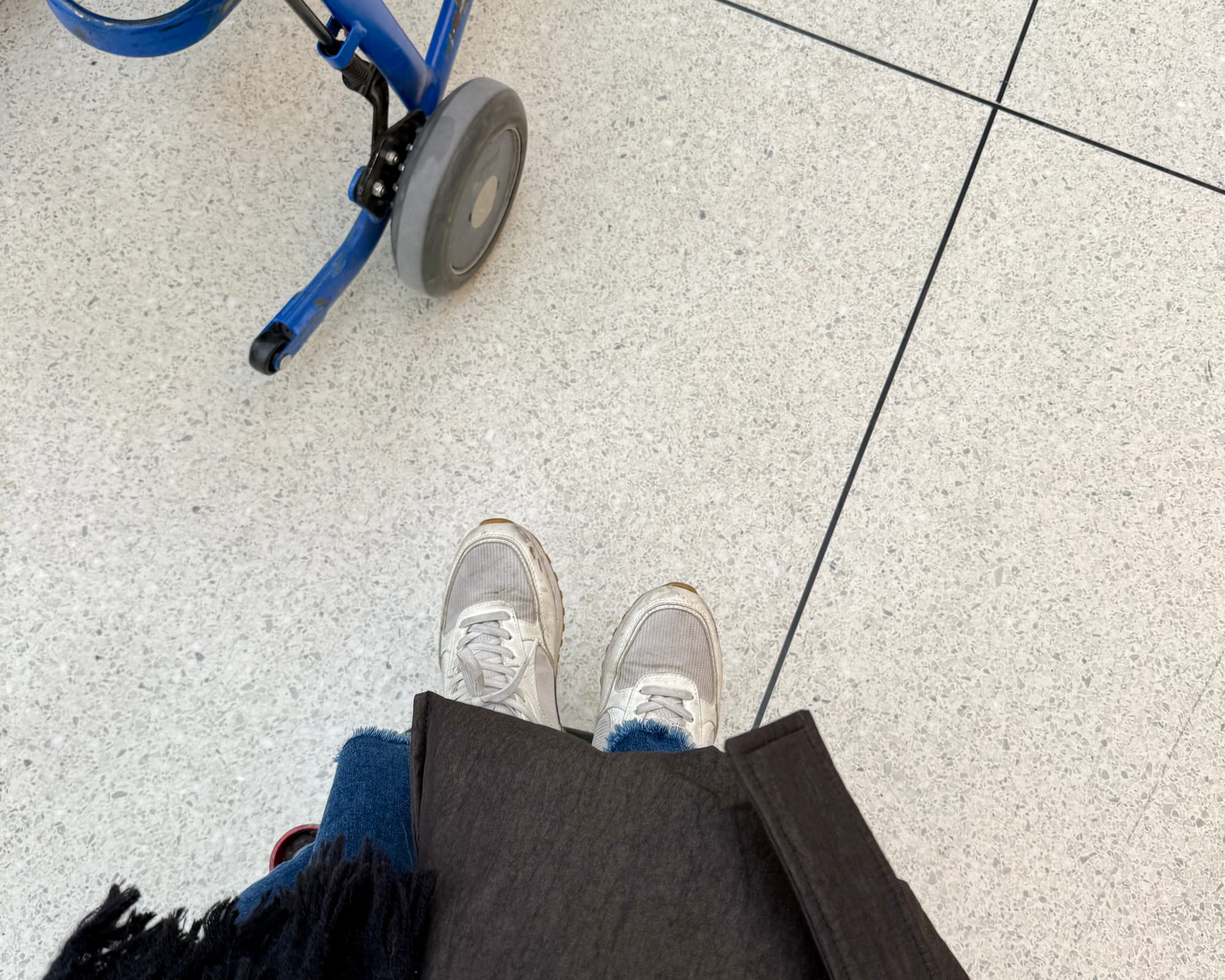
And suddenly, I was being wheeled through airports.
The Body Drew the Boundary
Mexico City → New York → Seoul.
A broken foot.
A feverish body.
More than 100 kilograms of suitcases filled with glass, canvases, and archives.
I moved across continents in a wheelchair — still coordinating logistics, still thinking ahead, still trying to maintain control.
But something had cracked beyond the ligament.
When I landed in Seoul, the doctor didn’t negotiate.
Half cast.
Three-plus weeks.
No “just push through.”
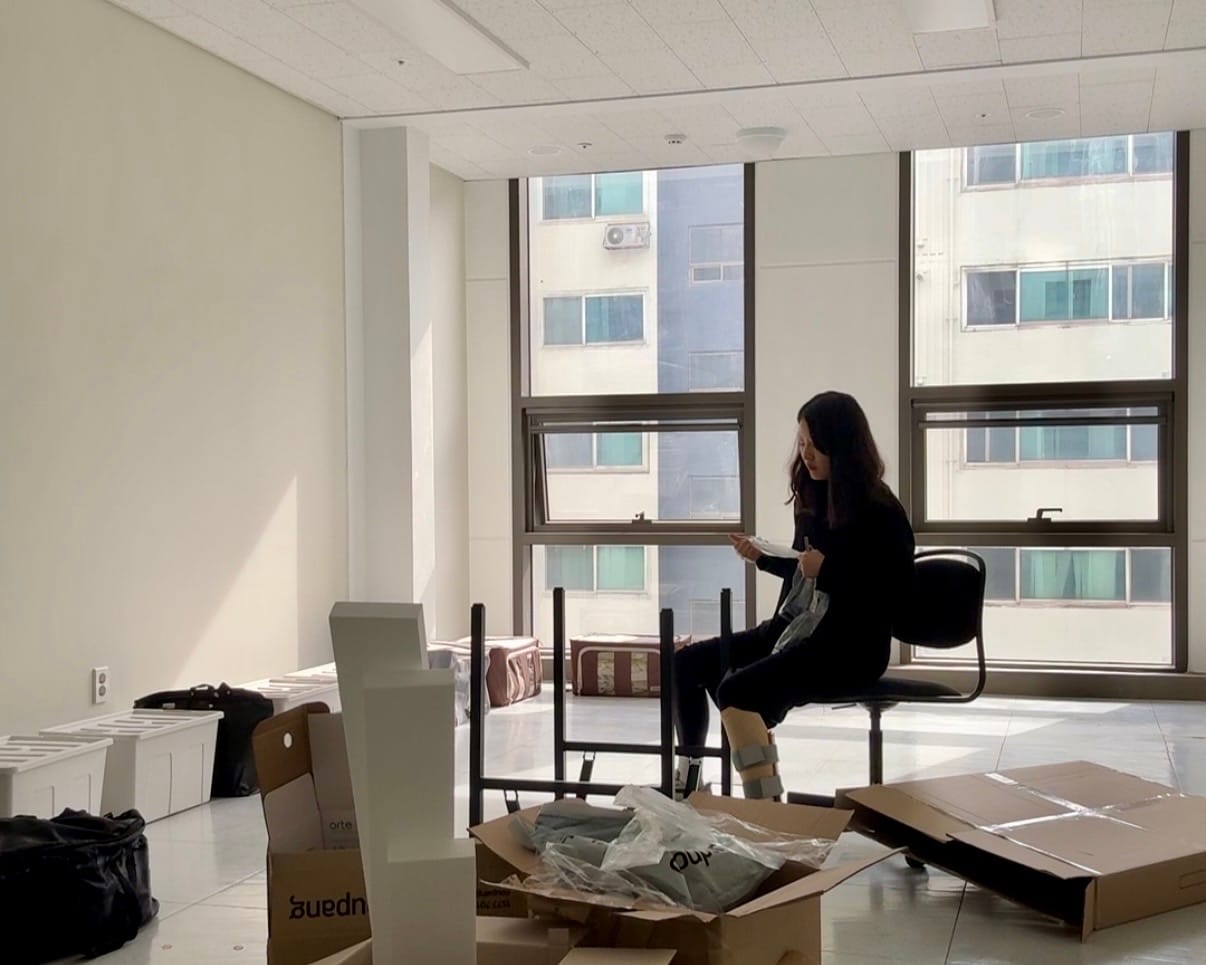
The cast began one day before my scheduled move into my new art studio.
Of course it did.
What Actually Ruptured
It wasn’t just my ligament.
It was my timeline.
I had already mapped the next arc:
Returning to Mexico — Mexico City, Baja California, Veracruz — to continue projects in motion.
Going back to New York during Frieze and NADA Art Fair season.
Preparing for a residency in Portugal in late May.
Planning to attend SXSW 2026.
Considering the Art of Hosting workshop abroad — Vancouver or Montreal.
The sequence made sense.
The momentum was building.
Each commitment connected to the next.
And suddenly, all of it dissolved into uncertainty.
Airports were replaced with clinic visits.
Residencies with physiotherapy appointments.
Art fairs with elevation and ice packs.
But the rupture went deeper than logistics.
It touched identity.
The identity of the woman who carries everything alone.
The one who moves efficiently, independently, relentlessly.
The one who prides herself on resilience.
I’ve written about crossing borders.
About sedimentation.
About becoming a mountain with wings.
But this was not expansion.
This was interruption.
Interruption reveals where we over-function.
Sometimes the break is not only in the body.
It’s in the storyline we thought was guaranteed.

Learning to Receive
In the weeks that followed, I practiced something I’m not naturally inclined toward.
Receiving.
Wheelchair assistance.
Movers.
A professional organizer.
Doctor.
Physiotherapist.
Coach.
Friends.
Not symbolically. Practically.
“Can you carry this?”
“Can you drive me?”
“Can you help me reorganize?”
For someone who has built a life on capability, this was no small shift.
I realized how often strength becomes a shield against dependence.
And how much nervous system safety comes from letting others show up.
Receiving is not weakness.
It is relational strength.
When the Body Sets the Boundary
I had been moving at high velocity.
Across countries.
Across projects.
Across identities.
The cold.
The rupture.
The cast.
The timing.
When your body stops you, it is structural — not symbolic.
Not punishment.
Not failure.
Correction.
Sometimes the body sees the overload before the mind admits it.
What Rest Revealed
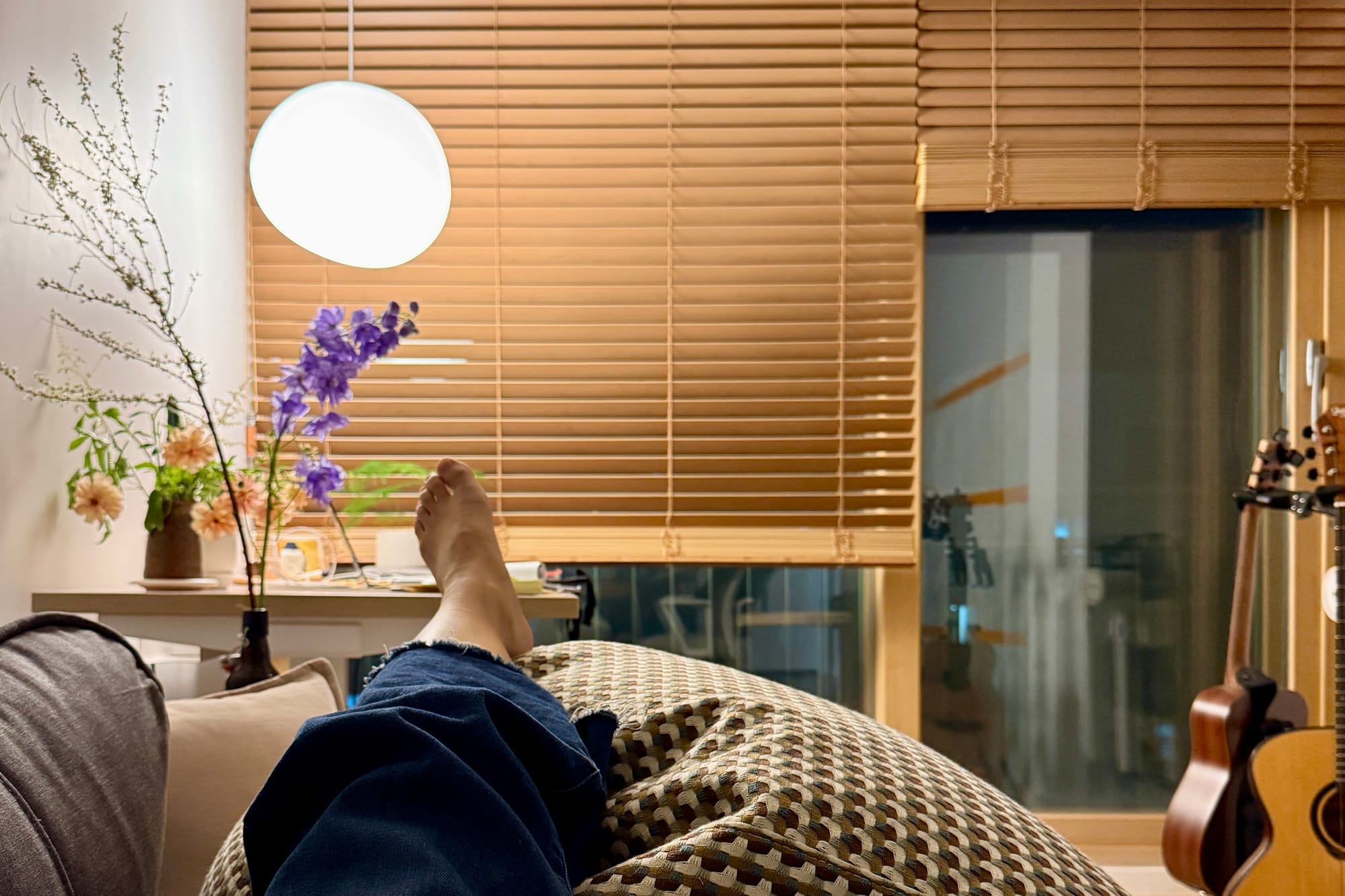
Stillness clarified what motion had blurred.
Expansion without recovery leads to breakdown.
Independence without support becomes isolation.
Motion without integration fractures the system.
We admire endurance.
We rarely respect recovery.
Strength compounds in recovery.
Athletes rebuild in recovery cycles.
Muscles grow when they are not under strain.
Why do we expect leadership, creativity, and reinvention to operate differently?
Immobilized, Not Powerless
In the cast, I couldn’t travel.
But I could design.
I couldn’t move fast.
But I could deepen.
The pause aligned with the opening of my studio in Seoul.
While my body was immobilized, I was physically grounding.
The woman who wanted to be a mountain with wings was being asked to learn mountain first.
Stability before expansion.
Integration before acceleration.
Not as a philosophy.
As a lived condition.
Reinvention Includes Recovery
We romanticize reinvention as bold pivots and dramatic movement.
But sometimes reinvention looks like:
Sleeping.
Elevating your foot.
Accepting help.
Rescheduling.
Letting the body lead.
Sometimes the most powerful leadership move is to stop.
Not because you quit.
But because you respect the architecture of your own system.
Final Reflection
Where are you overriding your own limits?
What are you pushing through that might need integration?
Who do you need to let help you?
You don’t have to wait for rupture to recalibrate.
But if rupture comes, perhaps it is not the end of momentum.
It may be the beginning of sustainability.
— Jay